



 05:44 2026-03-20
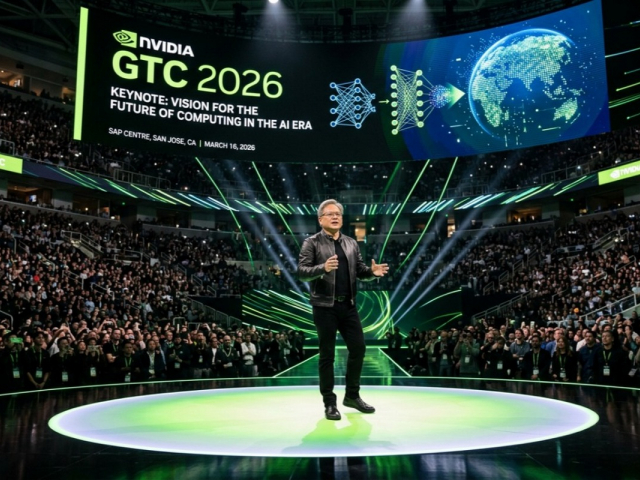
On March 16, 2026, the world of technology officially entered a new era. At the SAP Center, 30,000 people gathered, while the online audience numbered in the millions. Wearing his signature leather jacket, Jensen Huang transformed abstract computing concepts into a tangible reality over the course of two hours. He began with the fundamental theory of tokens and concluded with an emotional scene featuring a snowman robot
 422
422 8
8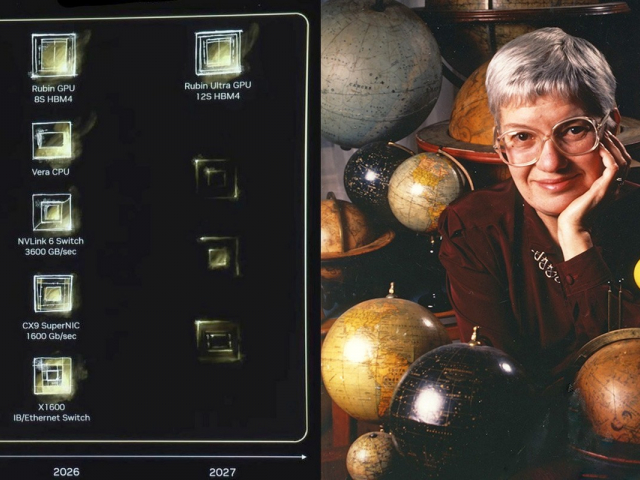
Currency of future: magic of tokenization
Huang began his presentation with the fundamental concept of a token. This year, tokens have become the "atoms" of the global economy, a unit of meaning generated by AI. Nvidia has redefined its production. Huang emphasized that the efficiency of modern civilization is now measured not in barrels of oil but in the number of tokens created per watt of energy used. On a massive screen behind him, billions of glowing particles assembled into complex structures, visualizing the invisible flow of data that now permeates every aspect of our business and daily lives.
Vera Rubin: exponential powerhouse
The highlight of the evening was the Vera Rubin architecture, named after the legendary astronomer. Huang presented a chart that silenced the audience: over the last ten years, Nvidia's computing performance has increased 40 million times. Vera Rubin is not just a new GPU; it represents a quantum leap in training next-generation models. The new platform enables AI training with four times fewer resources compared to Blackwell, while reducing the cost of each generated token by 90%.
Orbital mind: AI beyond Earth
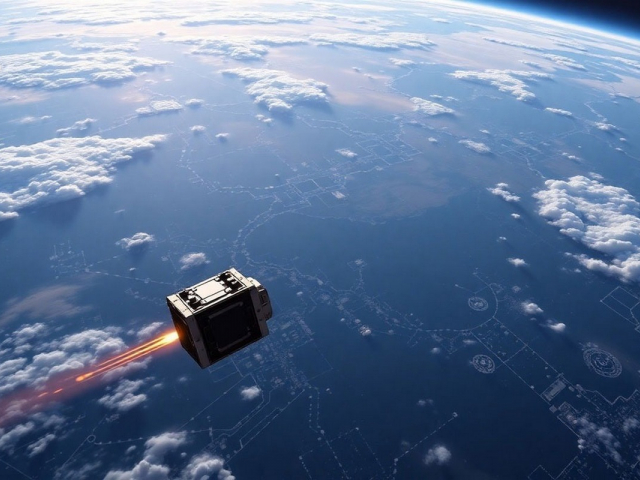
Huang officially declared Nvidia's expansion beyond the atmosphere. The Vera Rubin Space Module is the first specialized chip for orbital data centers (ODC). In partnership with SpaceX, Axiom Space, and Kepler Communications, the company is starting to deploy computing power in space. This solution addresses two major challenges faced by terrestrial systems: energy scarcity and cooling difficulties. The vacuum and endless solar energy make orbit an ideal location for "AI factories." The space module provides 25 times more power for inference than the H100.
Deal of the century: inference on Groq steroids
The announcement of the integration of Groq technologies after a $20 billion deal was a response to criticism about the slow performance of GPUs in model execution tasks. The new Groq 3 LPU (Language Processing Unit) does not compete with Vera Rubin but complements it. Together, they deliver fantastic efficiency: a 35-fold increase in the number of tokens per watt compared to previous systems. This solution targets the "inference economy," where revenue is generated not from training cycles but from billions of instantaneous user responses.
NemoClaw: era of autonomous agents
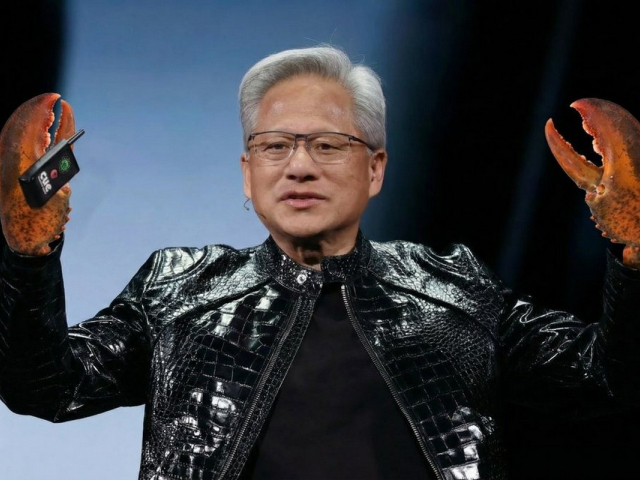
The world of chatbots has officially been declared a thing of the past. Huang introduced NemoClaw, a platform for creating autonomous AI agents, or "claws." To demonstrate the power of the system, Jensen showcased his avatar with massive crab claws that mirrored his movements in real time. The audience laughed, but the message was serious: Nvidia is creating an operating system for personal AI. NemoClaw enables companies to deploy agents that make decisions autonomously, manage files, and interact with other systems in a secure environment.
Sovereign AI map: geopolitics of code
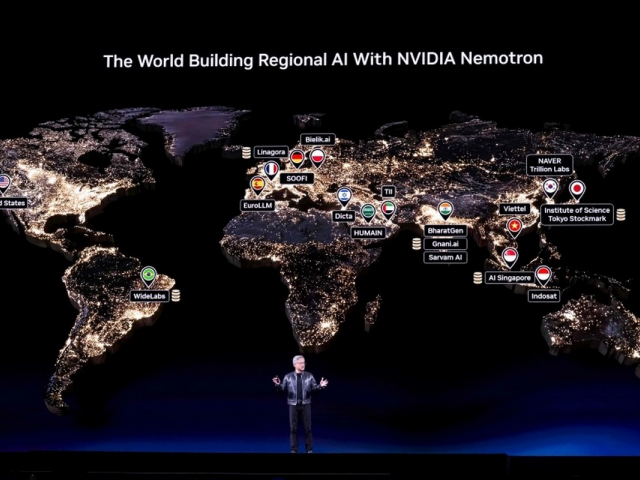
The geopolitical section of the presentation brought a tense silence. On a large screen, Huang unveiled the Sovereign AI map showing countries building national AI infrastructure based on Nvidia's solutions. The brightly highlighted areas of Europe, India, Japan, and the Middle East contrasted sharply with the large gray blot that represented Russia. This was no coincidence: Huang stated directly that data is a national treasure, and every country must own its "intellectual sovereignty."
Robot Olaf: digitized empathy
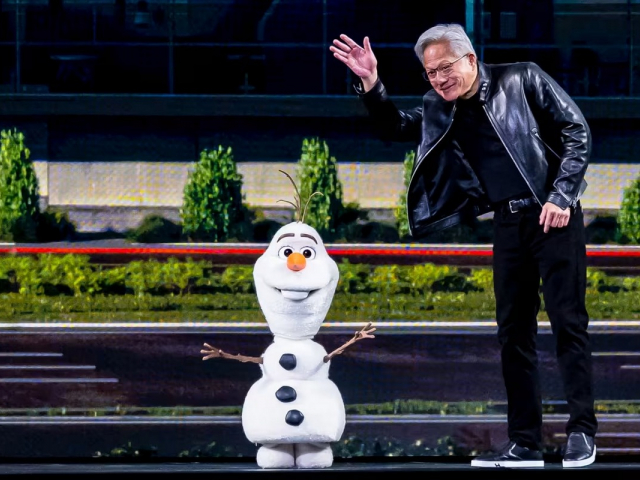
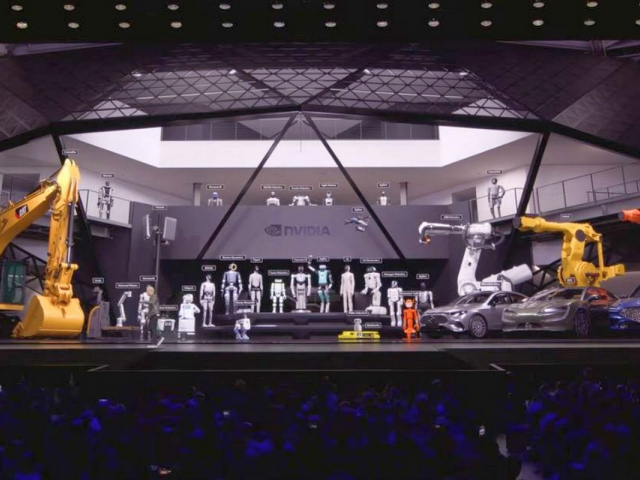
The technical demonstration culminated in the appearance of the Olaf robot, created in collaboration with Disney Imagineering. The snowman from "Frozen" not only walked but also demonstrated a new level of physical intelligence. Olaf learned to balance on unstable surfaces within just a few hours of simulation in the Omniverse environment, utilizing deep reinforcement learning algorithms. Huang emphasized that Nvidia's robots, such as Isaac, are not cold mechanisms but rather entities capable of learning and interaction.
Campfire finale: AI with human face
The presentation concluded unexpectedly with a cozy scene. A video appeared on screen, showing Jensen and a group of various model robots sitting around a virtual campfire. The robots joked about tokens, discussed open-source code, and sang a country song about the conference. The main slogan of the finale read: "We are not building Terminators. We are building friends." With this gesture, Huang aimed to alleviate global concerns about a potential machine uprising. He positioned AI as a companion meant to expand human capabilities rather than replace them.


-
Grand Choice
Contest by
InstaForexInstaForex always strives to help you
fulfill your biggest dreams.JOIN CONTEST -
Chancy DepositDeposit your account with $3,000 and get $1000 more!
In June we raffle $1000 within the Chancy Deposit campaign!
Get a chance to win by depositing $3,000 to a trading account. Having fulfilled this condition, you become a campaign participant.JOIN CONTEST -
Trade Wise, Win DeviceTop up your account with at least $500, sign up for the contest, and get a chance to win mobile devices.JOIN CONTEST


